A Complete Guide to Skylight Window Replacement: Types, Benefits & Options

Many homes feel dark even on sunny days. Dense neighborhoods, deep eaves, and busy interior layouts block daylight, leaving living spaces dependent on artificial bulbs. That extra electricity raises bills and still falls short of the warm glow the sun provides.


Skylight windows
change that story. By opening a direct path from roof to ceiling, a skylight allows daylight to pour into kitchens, bathrooms, hallways, and attic rooms. But what happens when it’s time to replace it? In this guide, you'll learn the types of skylight you can choose for replacement, and smart ways to keep them working for decades. Ready to bring some light into your home again? Let's dive in!


The Big Payoff: Why Homeowners Love Skylights


Light, Air, and Lower Bills

A well-placed skylight can illuminate up to 30% more floor area than a same-size wall window. That's one of the prime benefits of a skylight. A reduced need for fixtures means lower power usage, especially in rooms that remain dark for most of the day.


Ventilating models open manually or by motor, drawing moist air out of kitchens and baths. This reduces mold risk and keeps paint looking new. Add blinds, and you can fine-tune glare without shutting out the sun completely.


Design Depth

A shaft painted a contrasting color can become an architectural feature in its own right, adding perceived height and drama. That visual lift ranks high on the list of skylight advantages reported by interior designers.


Health Perks

Natural light helps regulate circadian rhythms, improves mood, and even boosts vitamin D levels. Occupants feel more energized, while plants thrive in the increased daylight. Those human-centered skylight advantages make a small investment pay off every single day. 


Exploring Popular Types and Styles

Choosing among the many skylight options starts with roof pitch, ceiling structure, and lifestyle goals. Before picking a model, compare the types of skylight that best suit your climate, budget, and design vision. Below is a quick tour of the designs you'll encounter.


Fixed Skylights

These don't open. They're ideal for vaulted ceilings or rooms where extra ventilation isn't needed. Simplicity keeps cost and maintenance low—two clear benefits of a skylight in fixed form.


Venting Skylights

Manual crank, electric switch, or solar-powered units tilt open for airflow. Each operating method falls under specific skylight options offered by leading brands.


Tubular Skylights

Also known as sun tunnels, these small-diameter tubes snake through attic spaces. They flood hallways or closets with daylight yet take up minimal roof area.


Curb-Mounted vs. Deck-Mounted

A curb-mounted model sits on a raised wooden box, a good match for flat or low-slope roofs. Deck-mounted frames attach directly to the sheathing, making a tight profile on steeper roofs. Both integrate with shingles using a specialized drip edge and flashing.


Flat and Domed Glazing

A modern flat skylight features a sleek profile that seamlessly integrates into the roofline. Domed acrylic models shed snow quickly, a big plus in colder climates. Whichever you prefer, today's glazing blocks UV rays and insulates as well as a quality wall window.


Placement and Design Considerations


Roof Pitch and Orientation

South-facing units capture steady light all day, while north-facing ones deliver soft, indirect light. West orientations may need blinds to limit late-afternoon heat. On a low-slope membrane surface, a flat skylight mounted on a curb keeps water out while still allowing it to aim at the sky.


Room Function

Kitchens and bathrooms require venting models to release humidity. Home offices benefit from fixed units that add daylight without drafts. Curious about matching skylights to other roof material types


Size Rules

A safe formula is 5-10% of the floor area for rooms with many windows, and up to 15% for darker rooms. Factor in the shaft flare: a wider opening at the ceiling spreads light further and emphasizes those sought-after skylight roof aesthetics.


Replacement and Maintenance Tips


Hire Qualified Pros

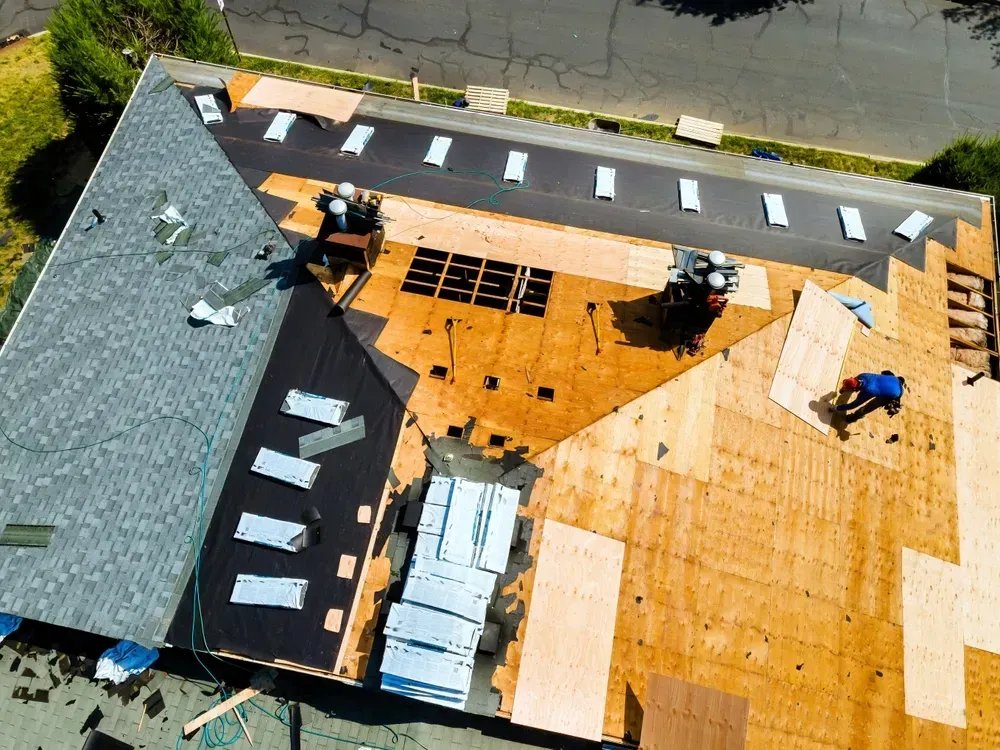
Replacing materials in the roof is no small task. Partner with a crew skilled in both skylight and residential roofing to secure warranty coverage and long-term performance.


Flashing and Sealing

Factory flashing kits are designed to fit shingles, metal, or tile profiles and include a drip channel along the lower edge. Correct integration with underlayment and roof-window flashing prevents leaks better than generic metal work.


Seasonal Care Checklist

• Clean glass twice a year with mild soap.

• Clear leaves from the curb and gutters. Need help? Our gutter installation team keeps water moving in the right direction.

• Inspect seals every spring and fall. Small beads of clear silicone stop minor cracks before they grow.


Routine care locks in those enduring daylighting rewards while extending roof life.


Let the Light In With Confidence

AMP Restoration and Roofing knows that skylight windows should add joy, not headaches. If you need to update your old one, we are the team you can count on. As a leader in roof restoration, we combine skylight expertise with rigorous safety practices, industry-leading materials, and transparent communication.


Whether you need storm repair, a complete re-roof, or sleek daylighting upgrades, trust a partner who sees the whole envelope. We blend craftsmanship with modern tools to finish on time and on budget, leaving your home brighter, drier, and more efficient. Ready to unlock the sky's full potential?


GET A CONSULTATION


You might also like

By Amp Roofing January 21, 2026
Measuring a roof looks easy, but it has its challenges. People often guess instead of doing the math, and that guess can cost real money during repairs or upgrades . Waste on extra shingles or short orders delays a project, leaves patchy colors, and strains the budget. This post solves that problem. You’ll learn how to calculate roof area with pitch in clear steps, pick the right tools, and check your answer with simple charts. By the end, you’ll feel confident ordering materials or speaking with a contractor. Keep reading to turn numbers into a solid roof plan. Why Roof Area Matters Roofing materials are sold by the square foot, so every square foot counts. Over-ordering raises cost, and under-ordering adds labor trips. An accurate area also lets you compare quotes with fair numbers. When you know the math, you can see if a bid pads material or labor. A true area figure can even impact insurance coverage and claims, as adjusters require proof. Gather Your Roof Data Tools Needed 100-foot tape or digital laser Sturdy ladder and shoes with grip Pitch gauge or smartphone inclinometer Notepad, pencil, and calculator Measure the Deck Sketch each roof section from the ground. Mark eaves, ridges, valleys, and hips. Measure the horizontal length and width of every rectangle or triangle. Stay on the ground when possible; use the ladder only for hard angles. Write numbers on the sketch right away to avoid confusion later. Use Basic Geometry First Start flat. Treat every roof section as if it were lying on the ground. Multiply length by width for rectangles. For triangles, multiply the base by the height and divide by two. Add all shapes together. This gives you the plan area, also called the footprint. Next, convert the plan area to square feet of covered surface. A flat roof needs no more math. Pitched roofs require an adjustment, and that’s where roof pitch degrees become crucial. Adjust for Pitch Roof pitch shows rise over run. A 6-in-12 roof rises six inches for every twelve inches of run. Builders often refer to this standard pitch for roofs on modern homes. Pitch changes the surface area because the slope is longer than the plan footprint. Convert Pitch to a Slope Factor Find your pitch with a gauge, app, or by placing a level and ruler on the roof. Turn the pitch into an angle. Use online charts that list roof pitch degrees for common ratios. For instance, a 6-in-12 equals 26.6°. Use the slope factor formula: 1 ÷ cos θ. For 26.6°, the factor is 1.12. Multiply the plan area by this factor. You now have true roof area. Check Common Pitch Scenarios “What is a 6 / 12 roof pitch?” You already saw it: a 6-inch rise over a 12-inch run, at 26.6°, with a factor of 1.12. Say your plan area is 1,800 ft². Multiply: 1,800 × 1.12 = 2,016 ft². Mention this aspect when ordering materials so suppliers know your slope. Low Pitch and Steep Pitch A roof with a pitch of less than 3-in-12 meets the low-pitch definition . These roofs shed water more slowly and need special membranes. They also have a smaller slope factor, so a plan area of 1,800 ft² with a 2-in-12 pitch (9.5°) uses a factor of 1.01, only 1,818 ft². Building codes may require enhanced underlayment any time a design falls into the low-pitch definition category. At the other end, an 11 12 pitch roof rises eleven inches per foot, angle 42.5°, factor 1.35. The same 1,800 ft² footprint becomes 2,430 ft² on the slope. Because walking on an 11 12 pitch roof borders on climbing, contractors often add safety costs to their estimates. Metal Roofing Pitch Transition Switching from shingles to metal often involves a transition from a shingle to a metal roofing pitch . Contractors may reduce the drop from 6-in-12 to 3-in-12 over a porch to match the style or improve drainage. Calculate each section separately, then add the totals. Mention metal roofing pitch transition during design so flashing and trim match both slopes. Remember that many builders treat a 6-in-12 as the standard pitch for a roof , so material quotes frequently default to that assumption. Double-Check Your Math Compare your total against satellite measurement apps. Re-measure key sections if numbers differ by more than 2 %. Ask a trusted roofer to confirm the area before ordering. Most will verify for free while preparing a quote. Accuracy here prevents waste, keeps schedules tight, and supports warranties. Roofing Expertise You Can Trust  AMP Restoration & Roofing knows roofs inside and out. Our team utilizes high-quality tools and on-site inspections to verify every square foot. We don’t guess; we prove. We then recommend materials that match your style, budget, and local building codes. The result is a roof that lasts, drains well, and boosts curb appeal. Clients stay informed at each step, from the first call to the final nail. That’s because we build the plan together, using clear numbers and easy language. Whether you’re curious about how to calculate roof area with pitch or want us to handle the job from start to finish, we’re here to help. Choose AMP Restoration and Roofing for precision and peace of mind! CONTACT US TODAY
Two-story house with gray weathered cedar siding
By Amp Roofing January 7, 2026
Discover the pros, cons, and smart alternatives to traditional wood siding. Learn why synthetic cedar shakes offer a timeless look with better durability.
new gutters roof building metal white system aluminum
By Amp Roofing January 7, 2026
Discover how aluminum gutters shield your roof, walls, and landscaping. Get expert tips on cleaning, sizing, and when to call for professional installation.
More Posts

Book a Service Today